Yes. Medium Density Fibreboard can be used for interior doors when the door is designed for dry or moderately humid indoor conditions and the board grade matches the application. Typical MDF density is about 600–800 kg/m³, making it heavier and generally more acoustically useful than many hollow-core constructions. Standard MDF is well suited to bedrooms, offices, closets, and living areas, while moisture-resistant grades are more appropriate near bathrooms or utility areas. For regulated North American products, MDF formaldehyde emissions under EPA TSCA Title VI are limited to 0.11 ppm, while thin MDF has a 0.13 ppm limit. Door performance still depends on the core, edge sealing, hinge reinforcement, coating, and installation.
MDF is made by breaking wood into fibres, combining those fibres with resin and wax, then pressing the mat under heat and pressure. Most general-purpose boards used for furniture and interior joinery fall around 600–800 kg/m³, although actual density changes with thickness and manufacturer. A 35–45 mm interior door containing a large proportion of MDF can therefore feel much more substantial than a lightweight hollow-core door of the same external dimensions.
That extra mass is useful, but manufacturers rarely need to make a complete door from one thick MDF slab. A common construction combines MDF faces or decorative panels with engineered stiles, rails, timber reinforcement, and a solid, tubular, particleboard, or lightweight core. A door built this way uses MDF where its smoothness and machining consistency are useful while placing stronger materials around hinges, locks, and edges.
MDF works especially well for painted doors because its surface contains no knots and has no visible grain direction. CNC routing can reproduce grooves, recessed panels, shaker profiles, curved lines, and geometric patterns across 100 or 1,000 doors with much less visual variation than natural timber normally produces. The broad face sands smoothly, although cut edges usually absorb more primer and require additional sealing before the finish coat is applied.
Paint quality therefore depends on preparation rather than on MDF alone. A factory may sand the surface, seal routed edges, apply primer, sand again, and then apply one or more finishing coats according to its coating system. If 5%–10% of the visible area includes heavily machined grooves or exposed profiles, poor edge sealing can become much more noticeable than it would on a plain flush face.
The same fibre structure that makes MDF easy to machine also changes how it behaves around screws. Repeated hinge movement concentrates force in a small area, so heavier doors need suitable hinge positions and adequate reinforcement rather than screws driven into an unsupported MDF edge. A tall door weighing 35–50 kg may need a different hinge arrangement from a lightweight 15–20 kg hollow-core leaf, even when both fit the same nominal opening.
For that reason, door weight should be considered together with the frame and hardware. Three hinges are common on many full-height internal doors, while taller, heavier, fire-rated, or high-use leaves may require four or more depending on the hardware specification. Hinge quantity alone is not a quality measure; screw length, reinforcement material, hinge rating, frame stiffness, and installation tolerances also affect long-term alignment.
| Area | Typical MDF-related consideration | What to check |
|---|---|---|
| Density | About 600–800 kg/m³ for many standard boards | Actual product data sheet |
| Door thickness | Often around 35–45 mm for interior applications | Core and edge construction |
| Formaldehyde | 0.11 ppm limit for MDF under U.S. TSCA Title VI | Supplier compliance documents |
| Thin MDF | 0.13 ppm limit under U.S. TSCA Title VI | Applicable board classification |
| Moisture | Standard MDF can swell after prolonged wetting | Board grade and sealed edges |
| Hardware | Heavy leaves need reinforced fixing zones | Hinge and lock-block design |
Moisture deserves more attention than ordinary room humidity. Standard MDF can absorb liquid water through damaged coatings, cut edges, hinge recesses, lock cut-outs, and the bottom of a door. Once fibres swell substantially, drying does not normally return the board to its original dimensions, so bathrooms and utility rooms require more careful material selection than a bedroom with indoor relative humidity around 40%–60%.
Moisture-resistant MDF is available for interiors where humidity is periodically higher, but the term does not describe a waterproof board. It can be suitable for a well-ventilated bathroom door when the manufacturer permits the use and all faces and edges are properly coated. A door exposed to repeated floor flooding, direct shower spray, exterior rain, or long periods near 90% relative humidity should use a door system specifically rated for those conditions.
The bottom edge is often the first area worth checking because cleaning water can remain on tiled or vinyl floors. Leaving an unfinished MDF edge only a few millimetres above a frequently wet floor increases the opportunity for water uptake. Factories and installers generally obtain better results when the top, bottom, lock cut-outs, hinge recesses, and newly trimmed surfaces receive the same level of sealing attention as the visible faces.
Acoustic performance is another reason dense engineered doors are used in bedrooms, meeting rooms, hotels, and offices. A heavier solid-core MDF-faced door usually blocks more airborne sound than a very light hollow-core leaf, but sound reduction cannot be estimated accurately from MDF density alone. A 3–8 mm undercut or poorly sealed perimeter can allow substantial sound leakage even when the door leaf itself is relatively dense.
A tested acoustic door therefore combines the leaf with the frame, seals, threshold arrangement, and installation details. Published ratings such as STC or Rw should refer to the tested door assembly rather than a marketing description such as “solid MDF.” Two doors with identical 44 mm thickness can produce different acoustic results because the internal core, perimeter seals, frame interfaces, and glazing arrangements are different.
Fire performance follows the same principle. Standard MDF does not automatically become a fire door because it is dense, and a fire-retardant board by itself does not establish a rating for a finished opening. A 30-, 60-, or 90-minute requirement normally applies to a tested assembly that includes the door leaf, frame, intumescent seals, hinges, lock hardware, closer, glazing if present, and installation method.
Material documentation is also relevant to indoor air quality. In the United States, EPA TSCA Title VI limits formaldehyde emissions from MDF to 0.11 ppm and from thin MDF to 0.13 ppm. California Air Resources Board requirements are commonly referenced in the same supply chain, so buyers specifying projects built after the federal compliance dates introduced from 2018 onward often request current third-party certification and production records rather than relying only on a product label.
For commercial purchasing, several details are more useful than asking whether a door is simply “MDF”:
-
Ask for board type, thickness, nominal density, moisture-resistant grade where required, and current emissions documentation.
-
Confirm the internal core, stile construction, hinge reinforcement, lock block, permitted trimming allowance, and maximum door dimensions.
-
Check whether the quoted performance belongs to the complete door set; a 60-minute fire statement or an acoustic rating should have supporting test documentation.
-
Request coating details if doors will arrive finished, including edge sealing and colour tolerance across large quantities such as 500 or 2,000 leaves.
-
Confirm storage recommendations because uninstalled doors should be protected from wet floors, rain, and poorly controlled building humidity.
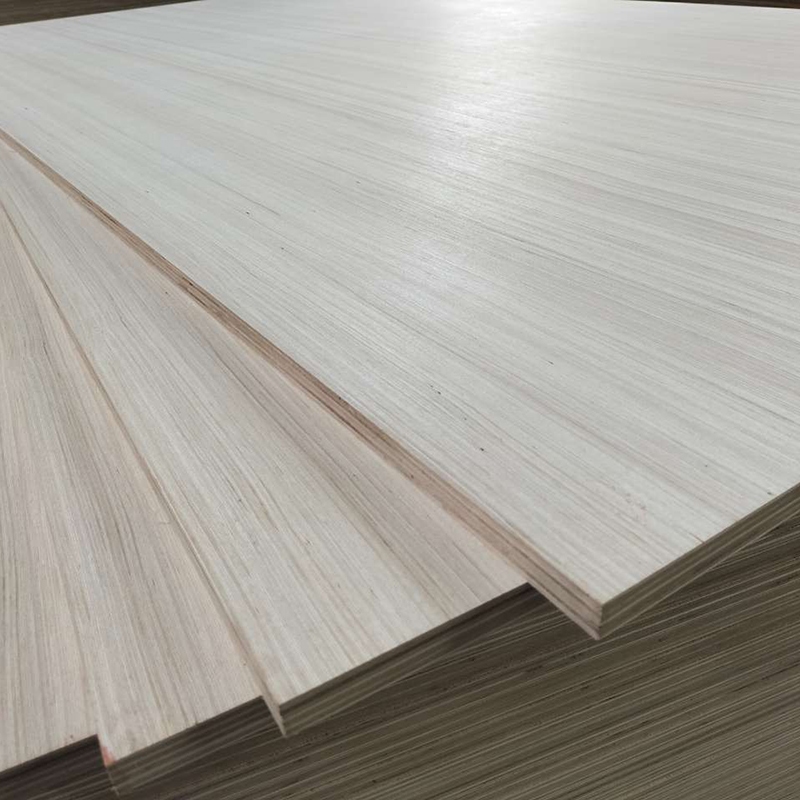
Material choice also changes when the design calls for a natural timber appearance. MDF is normally strongest as a painted or laminated substrate, while veneer-faced plywood and hardwood plywood are often selected when visible grain, higher screw-holding strength, or layered structural construction is preferred. Birch Plywood is one alternative used in furniture, cabinetry, joinery, and selected door components where the cross-laminated veneer structure offers different mechanical properties from fibreboard.
The comparison should stay focused on the actual door construction. MDF has a uniform face and machines cleanly; plywood uses cross-laminated veneers and usually provides better edge screw holding; solid timber provides natural grain but changes dimension as moisture content changes. A project containing 200 painted apartment doors may therefore use a different material combination from a small residential project where 10 doors are expected to display natural wood grain.
Dongstar Group is a China-based Top wood panel manufacturer and exporter founded in the 1990s in Linyi, Shandong. Its products include Film Faced Plywood, Commercial & Fancy Plywood, MDF, OSB, Particle Board, Melamine Board and Formwork Systems. Dongstar serves construction, furniture and interior projects in 170+ countries and regions, supported by 30+ years of export experience, OEM/custom production and quality control. Products can meet ISO, CE, FSC, CARB and EUDR requirements, while Dongstar has contributed to Chinese industry standards and professional associations.
Large projects also need tighter control of dimensions and finishing consistency. If 1,000 doors are ordered for apartments or hotel rooms, small variations in routing depth, edge thickness, colour, hinge preparation, or lock location can produce repeated installation problems. Approved production drawings, signed samples, tolerance requirements, batch inspection, moisture protection during transport, and records linking materials to production lots give buyers more useful information than appearance photographs alone.
Site trimming needs similar control. Some engineered doors allow only a limited amount to be removed from the top or bottom because trimming too far can expose the core or remove a reinforced rail. Removing even 10–20 mm beyond the manufacturer's allowance can alter hardware support, fire performance, acoustic sealing, or warranty conditions, so installers should follow the door maker's written trimming limits and reseal every freshly cut MDF surface.
Service life depends heavily on keeping water away from exposed fibres and maintaining the coating. Normal cleaning with a damp cloth is usually suitable, while repeatedly soaking edges or using water around damaged paint raises the chance of swelling. In a dry office or bedroom, a well-finished MDF-based door can remain stable for many years; in a wet environment, the same board grade and construction can deteriorate much sooner.
MDF is therefore a practical interior-door material when specifications cover more than the face panel. Density around 600–800 kg/m³, compliant emissions, reinforced hardware positions, sealed edges, an appropriate core, controlled moisture exposure, and tested fire or acoustic assemblies where required give designers and buyers measurable points to compare before selecting a door for residential, hospitality, office, or institutional interiors.